
A practical roadmap for SOC 2, ISO 27001, HIPAA, GDPR and ISO 42001—built around shared controls, reusable evidence and honest boundaries
Teams rarely choose five frameworks because they enjoy compliance. They arrive there because different buyers, markets, data types, products and risks create different trust requirements. A US enterprise prospect asks for SOC 2. A global customer recognises ISO 27001. A health-data workflow raises HIPAA questions. EU personal-data processing requires GDPR accountability. A growing AI product needs a governance model that can withstand real scrutiny.
The mistake is treating each new requirement as an entirely separate project. That approach multiplies policy drafts, evidence requests, spreadsheets, owner meetings and remediation work—often around the same underlying access, change, vendor, incident or training controls.
The opposite mistake is claiming that one framework or evidence item “covers everything.” It does not. This playbook shows the productive middle: operate shared controls well where outcomes genuinely overlap, then preserve framework-specific scope, legal, privacy, assurance and certification decisions.
1. Start with the business and scope—not a framework shopping list
The first decision is not “Which certification is best?” It is “Which obligation, buyer demand or risk are we trying to address first?” A framework is useful only when it connects to a real commercial, contractual, regulatory or operating need.
A practical priority map
| Signal | Likely question to resolve | Common next step |
|---|---|---|
| US SaaS buyers request an independent security report | Is a SOC 2 report becoming a commercial requirement? | Confirm customer expectations, Trust Services Criteria scope and audit timing. |
| Global/regulated buyers ask for an information-security management system | Is ISO 27001 the stronger long-term trust signal? | Define ISMS scope, risk approach and certification ambition. |
| A regulated healthcare relationship involves PHI/ePHI | Are HIPAA roles and safeguards in scope? | Classify the relationship, data and contractual requirements; obtain appropriate specialist input. |
| Product or operations process EU personal data | Does GDPR apply, and what controller/processor/accountability work is needed? | Confirm territorial and processing context; build a processing/accountability model. |
| The company builds, provides or materially uses AI | Which AI use cases require governed inventory, risk, oversight and records? | Define AIMS scope and a proportionate AI governance loop. |
There is no universal sequence. SOC 2 may remove the most immediate US procurement friction. ISO 27001 may be the broader international signal. HIPAA and GDPR are triggered by relationship, data and processing context—not by a wish to “add another badge.” ISO 42001 is relevant when AI use needs a management system, not because a product uses the word AI.
Decision rule: prioritise the obligation that is both real and time-sensitive, then design the first controls so they can become a credible foundation for the requirements that are likely to follow.
2. Why framework-by-framework programmes create unnecessary work
When each framework becomes a separate project, the same technical and operational fact gets rebuilt repeatedly:
- the same access review is exported for different requests;
- nearly identical policies are maintained in separate folders;
- one vendor assessment is answered in multiple inconsistent formats;
- engineering receives overlapping evidence requests from different programme owners;
- a common remediation item is tracked in several spreadsheets; and
- no one can explain which version of the evidence is current.
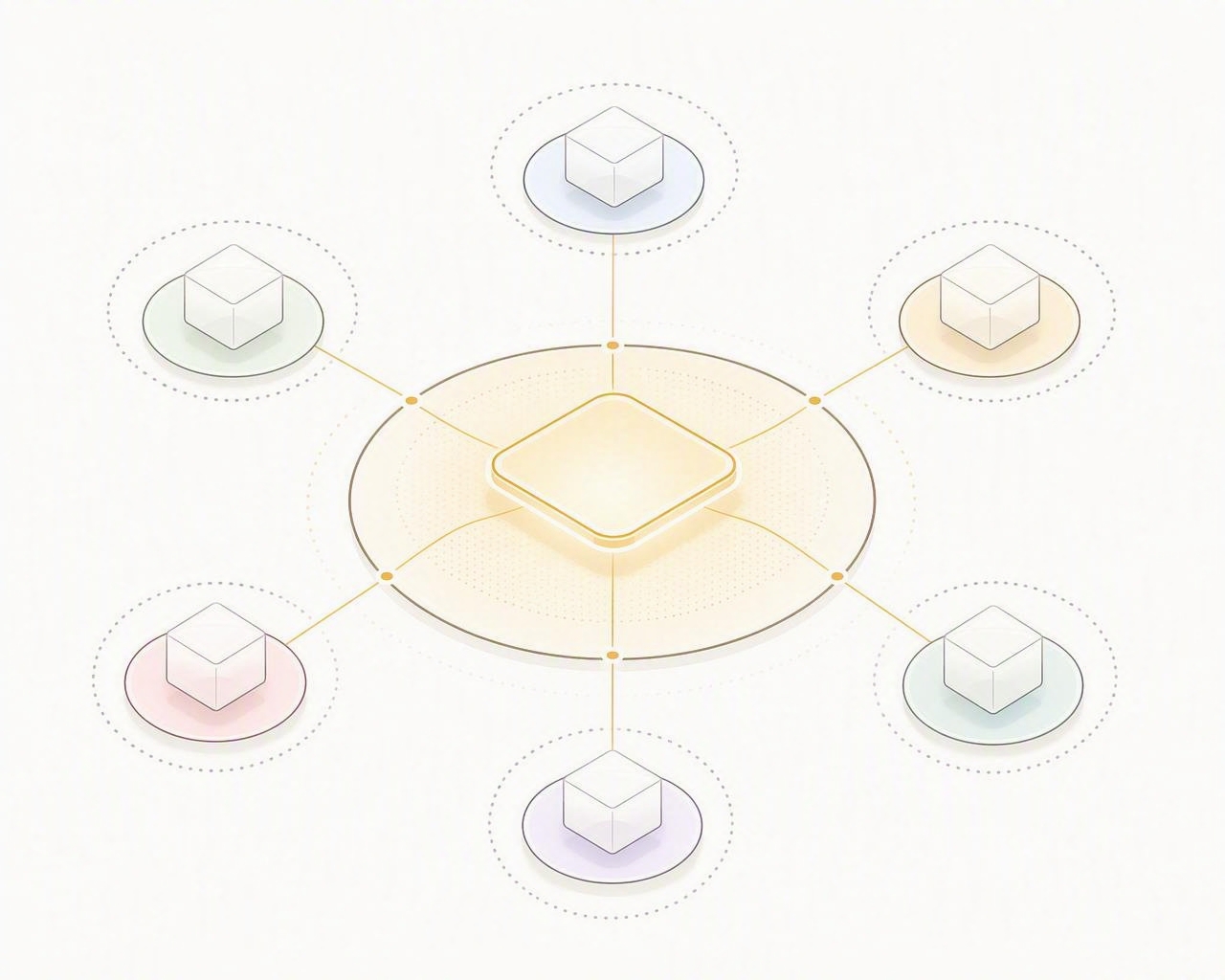
The goal of a multi-framework programme is not one giant generic control library. It is a clear control architecture: a shared operating fact is defined once, owned once, evidenced once where appropriate, and mapped carefully to each applicable requirement.
3. The universal-control model: share the outcome, verify the obligation
Universal controls are shared control objectives, implementations, owners and evidence sets that can support more than one assessment. They work best for control areas that are genuinely common across programmes: access management, change management, vendor oversight, security awareness, asset management, incident response, risk management and evidence governance.
Worked example: access management
| Layer | Example |
|---|---|
| Shared control objective | Authorise, document, review and modify access to in-scope systems and data. |
| Operational implementation | Identity workflow, joiner/mover/leaver process, privileged-role rules, periodic reviews and exception handling. |
| Shared evidence | Access policy, role/approval records, review output, remediation ticket and exception approval. |
| Mappings to assess | SOC 2 criteria, ISO 27001 controls, HIPAA safeguards where relevant, GDPR security obligations where relevant, and customer commitments. |
| Framework-specific check | Confirm in-scope data, systems, relationship, testing population, period, retention and assessor/legal expectations. |
The mapping is useful because it begins with a real operating control, not a spreadsheet match. But it is not a compliance conclusion. A shared access review does not automatically establish that every HIPAA, GDPR, ISO or SOC obligation is met. The programme still needs to test scope and evidence against the requirement in question.
The reuse-versus-separate test
For every proposed shared control or evidence item, ask:
- Is the underlying outcome actually the same?
- Does one team own the operation across the relevant scope?
- Can one record demonstrate operation for the required systems, population and period?
- Are separate legal, privacy, certification, customer or assessor decisions still required?
- Has the mapping been reviewed when the scope, product, vendor or framework changed?
If the first three answers are no, the item is not ready to be shared. If the fourth is yes, share the underlying control but retain the separate decision record.
4. Where work overlaps—and where it must remain distinct
The following is an operating-planning view, not a statement of legal or audit equivalence.
| Operating area | Shared foundation can help | Keep distinct |
|---|---|---|
| Security governance and risk | Ownership, risk register, policies, control reviews, management reporting. | ISO 27001 ISMS scope and certification evidence; SOC 2 criteria and report scope; AI-specific risk/impact context. |
| Access, change and technical security | Identity, access reviews, secure change records, vulnerability and configuration evidence. | HIPAA ePHI relationship/scope; GDPR Article 32 risk context; framework-specific test methods and populations. |
| Vendors and third parties | Due diligence, contract inventory, risk ratings, periodic reassessment and issue follow-up. | HIPAA BAAs; GDPR controller/processor and transfer arrangements; AI supplier dependency and use-case conditions. |
| Incident response | Detection, triage, roles, root cause, corrective action and operational evidence. | HIPAA and GDPR notification analysis, thresholds, recipients and timelines; customer contract commitments. |
| Privacy and data governance | Data inventory, access controls, retention controls and supplier visibility. | GDPR lawful basis, transparency, rights, DPIA, transfers and accountability; HIPAA’s role/data definitions. |
| AI governance | Governance, risk, supplier review, change management, security and evidence-management practices. | AI inventory, intended use, impact assessment, monitoring, limitations, AIMS management review and AI-specific approvals. |
The clearest example is HIPAA and GDPR. They can share safeguards such as access control, logging, security risk assessment, vendor management and incident response. They do not share every legal or operational obligation.
The same discipline applies across all five frameworks. Reuse reduces duplicated work. Honest boundaries preserve credibility.
5. Build the shared-control lifecycle
1. Define
Write a control objective in plain operational language. “Access is managed” is too vague. “Privileged access to production systems is approved, reviewed at the defined cadence and removed or adjusted when role status changes” can be owned and tested.
2. Map
Link the objective to the requirements that may apply. Preserve the exact requirement, framework version, scope, rationale and reviewer. Mapping creates a hypothesis to verify; it is not a certificate.
3. Implement
Connect the control to the source systems, procedure, accountable owner, reviewer and exception path. A policy without a workflow is a design statement, not operating evidence.
4. Collect evidence
Capture the record close to the work: source, timestamp, scope, owner, review and any exceptions. Prefer source-system evidence and linked tickets over recreated screenshots.
5. Monitor
Choose a risk-based cadence. Some controls are event-driven, some daily or weekly, some quarterly. Monitor whether the control has current evidence, open exceptions, ageing remediation and changes in scope.
6. Update
Revisit the control and mappings when the product, data, vendors, systems, geographies, frameworks or assessment boundary changes. A map that never changes is usually not connected to the organisation it describes.
6. Design a multi-framework evidence architecture
Evidence should be reusable by reference, not copied into five silos. The control record becomes the anchor.
| Control record field | Why it matters across frameworks |
|---|---|
| Control objective and risk | Explains what outcome the control addresses. |
| Applicable requirements | Retains framework-specific mappings and scope notes. |
| In-scope systems/data/processes | Prevents a broad claim from being supported by a narrow artifact. |
| Accountable owner and reviewer | Makes operational and second-line responsibility visible. |
| Procedure and source system | Shows where the control happens and how evidence originates. |
| Evidence links and period | Lets each assessment inspect the relevant proof without duplicating it. |
| Test / review standard | Distinguishes “file collected” from “control assessed.” |
| Exceptions, remediation and risk acceptance | Preserves known weaknesses and decisions rather than hiding them. |
| Change/review trigger | Keeps the mapping current as the organisation changes. |
A simple evidence rule
Use one source of truth for an operational fact. Link it to each relevant control and framework mapping. Where the same fact has different scope or review requirements, retain the extra record beside the shared evidence—not a disconnected duplicate in a new folder.
For example, a vendor assessment may underpin customer assurance, ISO 27001 supplier-management evidence and elements of a HIPAA/GDPR programme. Yet a particular healthcare relationship may still require a BAA, while a GDPR processor relationship may require different terms, transfer analysis or data-processing documentation.
7. A practical 12-month roadmap
Quarter 1 — establish the shared foundation
- Confirm the current commercial, contractual, regulatory and product drivers.
- Define the in-scope service, systems, data, people, vendors and geographies for the first programme.
- Select ten to twenty high-overlap controls and assign accountable owners.
- Build the first requirement → control → risk → evidence map.
- Identify the separate obligations that cannot be treated as shared work.
Outcome: a controlled scope and an owner-backed control foundation—not five unconnected trackers.
Quarter 2 — make controls and evidence operate
- Connect priority controls to reliable evidence sources and review rhythms.
- Establish exception, remediation and risk-acceptance workflows.
- Launch the first privacy, HIPAA or AI governance record sets where they are genuinely in scope.
- Conduct a readiness review against the framework or buyer demand that is most immediate.
Outcome: current, traceable evidence and known decisions around the programme that matters first.
Quarter 3 — add the next framework without starting over
- Map the shared-control foundation to the next validated framework scope.
- Add only the new procedures, records, controls and evidence that the new requirement needs.
- Test cross-framework evidence for scope, period, owner and review sufficiency.
- Run a mock review or customer-assurance rehearsal.
Outcome: demonstrable reuse with visible boundaries.
Quarter 4 — institutionalise continuous readiness
- Review repeated evidence friction and consolidate sources of truth.
- Improve monitoring for high-risk, high-change controls.
- Run management review across material risks, exceptions, framework status and resource needs.
- Refresh roadmap priorities as market, product and regulatory context changes.
Outcome: a multi-framework operating model rather than a sequence of certification sprints.
Multi-framework operator checklist
- Each framework has a documented business, contractual, regulatory or product driver.
- The first programme scope is explicit before control mapping begins.
- Shared controls have one accountable operating owner, evidence source and exception path.
- Every mapping retains framework-specific scope and review notes.
- Legal/privacy obligations such as lawful basis, rights, contracts, transfers and notification decisions are not flattened into generic security controls.
- AI governance records cover use case, owner, risk/impact, controls, monitoring and management review where ISO 42001 scope applies.
- Evidence is linked to a shared source of truth and tested for the appropriate population and period.
- The roadmap adds new frameworks by extending proven control patterns rather than restarting the programme.
Make the shared model real
Ciphrix helps teams operate one connected compliance workspace across controls, evidence, risks, policies and framework mappings. AI agents perform repeatable compliance work; expert humans guide implementation and retain accountable scope, legal, risk and approval decisions.
Book a demo to see how shared controls and evidence could map to your actual frameworks, systems and commercial priorities.
Source notes
This guide synthesises Ciphrix’s published universal controls guide, ISO 27001 vs SOC 2 guide, HIPAA vs GDPR guide, ISO 42001 compliance guide, continuous compliance strategy and control-mapping guide. Apply framework, contractual, regulatory and certification requirements to the organisation’s actual context, with qualified advice where needed.