
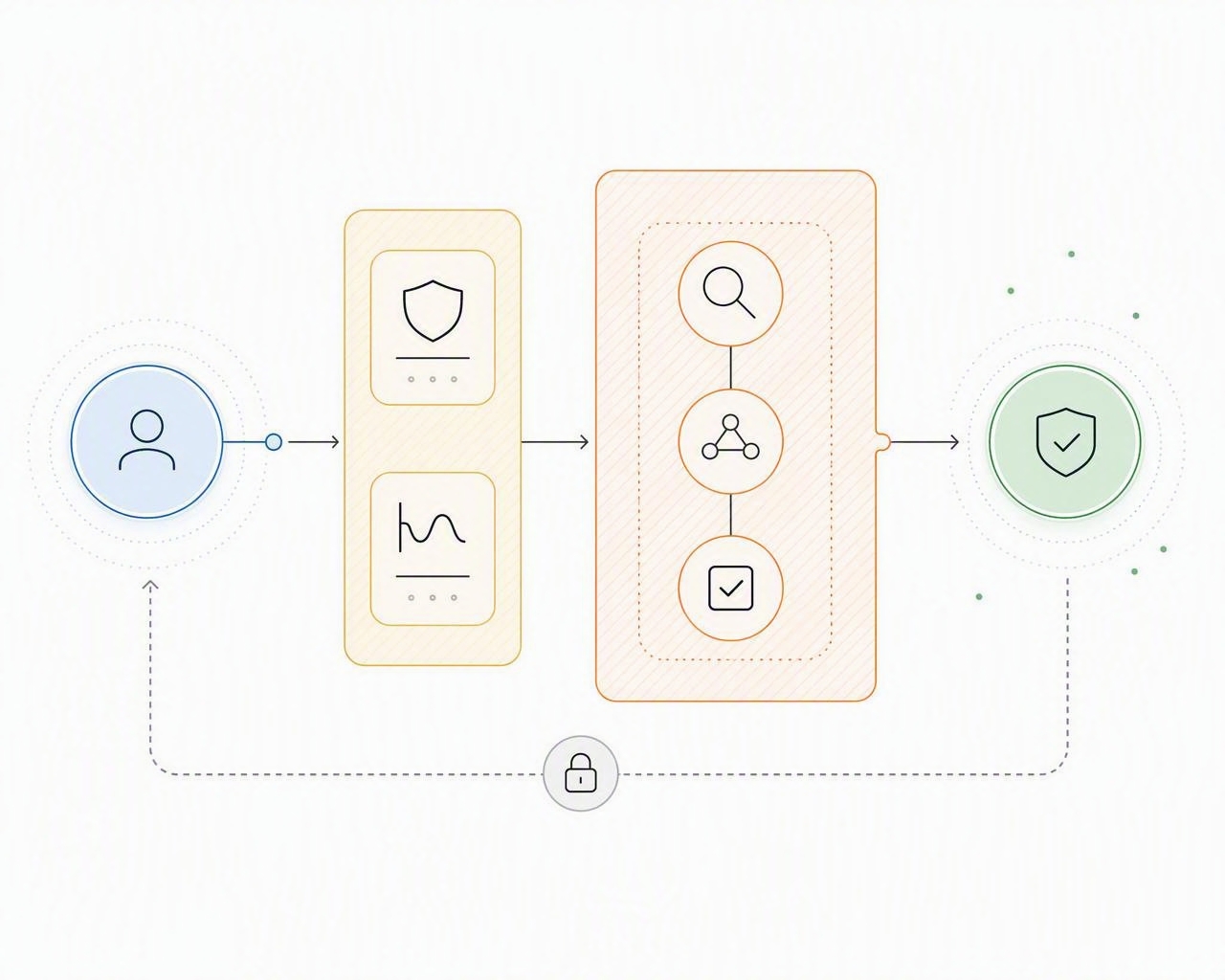
Build faster, more consistent buyer responses—without oversharing or making promises you cannot keep
Enterprise security reviews are not just a compliance task. They are a trust-validation moment in the sales cycle. Buyers need enough accurate information to decide whether your service is safe to onboard; your team needs a process that is fast, consistent and disciplined.
This kit helps sales, security, GRC, legal, privacy and engineering work from one repeatable operating model. It does not provide “copy this answer to every questionnaire” language. The right answer must remain true for the service, scope, data flow, current controls and customer context.
1. Triage before assigning work
Intake template
| Field | Record before work starts |
|---|---|
| Customer / deal | Account, stage, commercial owner and deadline. |
| Request type | Questionnaire, evidence request, live review or renewal refresh. |
| Service and data scope | Product/service, integrations, data categories and customer use context. |
| Risk / sensitivity | Regulated customer, sensitive data, requested technical depth, unusual commitments. |
| Existing material | Trust packet, SOC 2/ISO material, approved answers or prior customer response. |
| Required reviewers | Security/GRC, legal/privacy, engineering, leadership—only where needed. |
| Sharing conditions | Public, NDA-controlled, restricted or escalation-only. |
| Outcome | What was shared, approver, date and open follow-ups. |
Response rules
- Early or low-probability request: provide the approved trust packet or security overview; defer a broad bespoke review until commercial and technical fit is clearer.
- Late-stage or renewal request: use approved answers and evidence, then route only gaps or material exceptions to the appropriate owner.
- Irrelevant or duplicate question: give a scoped “not applicable” explanation or point to approved evidence; do not refuse vaguely.
- Sensitive evidence or unusual commitment: pause and escalate. Deadline pressure is not approval.
2. Build an answer bank, not a graveyard of old spreadsheets
An answer bank is a governed set of reusable statements linked to real controls and evidence. Each answer must show why it is safe to reuse.
| Answer-bank field | What good looks like |
|---|---|
| Question theme | Access, encryption, incident response, vendor management, privacy, availability or other clear topic. |
| Approved response | Concise, factual language matched to the actual product/service scope. |
| Source of truth | Policy, control, report, ticketed process or approved evidence that supports the answer. |
| Scope / caveat | Product, environment, data type, customer condition or limitation that prevents misuse. |
| Owner and approver | Person accountable for currency and person authorised to approve disclosure. |
| Last review / next review | A date and an event trigger such as policy, vendor, system or service change. |
| Evidence-sharing level | Public, controlled, restricted or escalation-only. |
Do not reuse: answers that make contractual promises, describe a changed architecture, refer to expired assurance material, or apply to a different service/data context.
3. Draft fast; review where judgement matters
The response workflow
- Ingest and parse. Separate questions, identify attachments, format constraints and customer deadline.
- Match. Locate approved answers, controls and evidence; distinguish high-confidence matches from gaps.
- Draft. Produce a clear response only from approved material, preserving scope and caveats.
- Review. Route low-confidence, customer-specific, legal/privacy or system-specific statements to an accountable reviewer.
- Approve and export. Preserve version history and required format; record the final approver.
- Learn. Add newly approved answers, flag stale content and link open gaps to programme remediation.
AI can support parsing, matching, drafting and triage. It should not make final disclosure decisions, promise a contractual SLA, interpret a novel legal obligation or sign off that a security claim is true.
4. Use response patterns that are specific without being unsafe
| Question type | Strong response pattern | Escalate when |
|---|---|---|
| SOC 2 / ISO status | State the approved status, scope/period and controlled-sharing route. | The buyer asks for a report outside its scope or an unapproved future commitment. |
| Access to customer data | Describe approved access roles, approval/review controls and relevant scope. | The question needs architecture, named personnel or customer-specific access terms. |
| Incident response | Summarise the approved process and communication approach. | The buyer requests notification commitments, legal terms or incident details. |
| Penetration testing / vulnerabilities | Share approved attestation or summary; offer controlled review where allowed. | Raw findings, exploit details or unresolved vulnerabilities are requested. |
| Subprocessors | Provide the approved list/location and review process. | Terms, transfers or notification commitments need privacy/legal approval. |
| “Not applicable” | Explain the product/data/scope reason briefly and offer relevant alternative evidence. | The question may be applicable under a different deployment or customer configuration. |
5. Control evidence disclosure deliberately
| Level | Typical material | Sharing rule |
|---|---|---|
| Public | Security overview, trust page and high-level practices. | Standard approved sharing. |
| Controlled | SOC 2 report, ISO certificate, subprocessor list and policy summaries. | Request/NDA process where required. |
| Restricted | Detailed architecture, configuration or vulnerability evidence. | Security-owner approval and need-to-know basis. |
| Escalation-only | Raw incident reports, internal diagrams, legal agreements and future roadmap. | Security/legal/executive decision. |
Record who received what, when, under which conditions and which follow-up remains open. This protects the company and keeps future answers consistent.
6. Final-response checklist
- The answer is current, factual and true for this service/customer context.
- It is supported by an approved source, control or evidence record.
- It does not imply an unheld certification, unapproved SLA or contractual commitment.
- Scope, limitations and “not applicable” rationale are clear where needed.
- Sensitive evidence follows the disclosure level and approval route.
- Legal/privacy, engineering or leadership review is recorded where required.
- The final response, approver, shared evidence and follow-ups are logged.
Make buyer trust a maintained operating asset
Ciphrix helps teams connect questionnaires to current controls, policies and evidence, while AI agents accelerate drafting and human experts retain review and disclosure accountability.
Book a demo to see how a governed answer bank and customer-assurance workflow could work in your own environment.
Source notes
This kit synthesises Ciphrix’s published security questionnaire automation guide, customer security reviews guide and enterprise security review guide. Keep all customer answers aligned to the company’s actual current controls, contracts and approval process.