

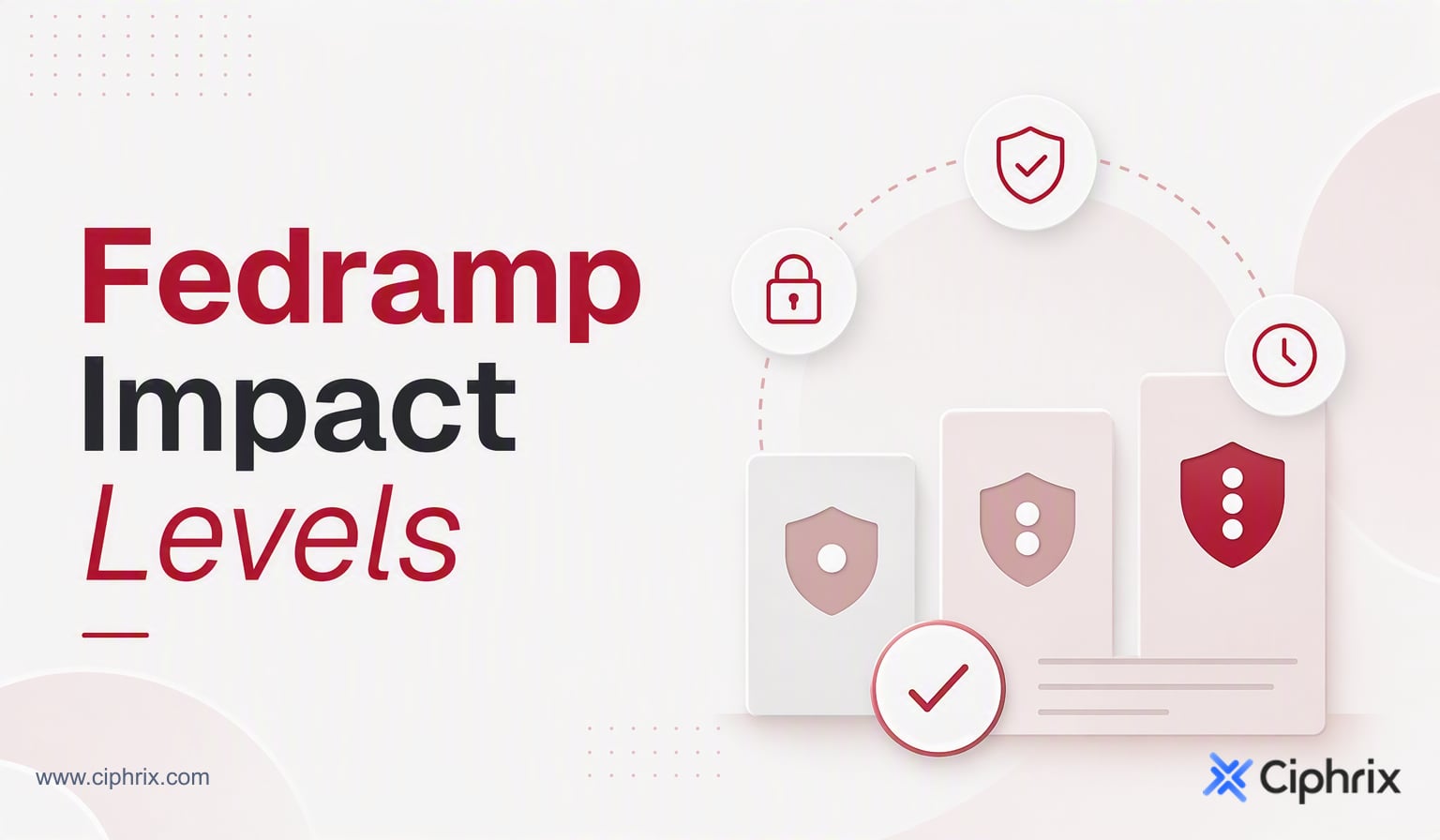
FedRAMP impact levels are Low, Moderate, and High. They describe the potential adverse impact if a cloud system loses confidentiality, integrity, or availability, they are determined through FIPS 199-style security categorization, not by vendor preference or market positioning.
One current source of confusion: FedRAMP Certification Classes are not the same thing as impact levels. Current FedRAMP transition materials initially map Classes B, C, and D to historical Low/LI-SaaS, Moderate, and High requirements, while Class A is a separate pilot-oriented class. But those classes describe certification scope and assessment requirements; agencies still categorize systems and make their own risk decisions.
FedRAMP impact levels vs Certification Classes: the distinction to get right first
FedRAMP impact levels answer a risk question: what is the potential harm if confidentiality, integrity, or availability is lost? Under FIPS 199, that harm is categorized as Low, Moderate, or High.
FedRAMP Certification Classes answer a different program question: what certification materials and assessment requirements apply to a FedRAMP certification package? FedRAMP explains that certification packages provide reusable security information for agencies, but they do not themselves constitute agency risk acceptance for a particular FIPS 199 system category (FedRAMP Authorization Designations).
For the 2026 transition, FedRAMP states that Class B, C, and D initially map to historical Low/LI-SaaS, Moderate, and High requirements respectively, while Class A is separate and pilot-oriented (Rev5 Program Certifications). That mapping matters operationally, but it does not replace—or, more precisely, it does not remove—the agency’s categorization and authorization decision.
The practical rule: use Low, Moderate, and High to understand impact; use Certification Classes to understand current FedRAMP certification packaging and assessment scope.
The three FedRAMP impact levels: Low, Moderate, and High
FIPS 199 defines impact values by the potential adverse effect of a loss of confidentiality, integrity, or availability: Low means limited adverse effect, Moderate means serious adverse effect, and High means severe or catastrophic adverse effect (FIPS 199).
FedRAMP High is therefore a High impact categorization: the loss of confidentiality, integrity, or availability could have a severe or catastrophic adverse effect.
| Level/path | Adverse impact | Typical data/use-case sensitivity | Baseline implication | Decision caution |
|---|---|---|---|---|
| Low | Limited adverse effect under FIPS 199 | Illustrative only: lower-sensitivity agency use where compromise would have limited mission, operational, or individual impact | Points toward the FedRAMP Low baseline or, for eligible SaaS, LI-SaaS | Do not assume “low sensitivity” from the application label alone; test confidentiality, integrity, and availability separately |
| Moderate | Serious adverse effect under FIPS 199 | Illustrative only: systems where disclosure, corruption, or downtime could materially affect agency operations, assets, or individuals | Points toward the FedRAMP Moderate baseline | Moderate is not a default commercial target; it should follow the impact analysis and agency use case |
| High | Severe or catastrophic adverse effect under FIPS 199 | Illustrative only: high-consequence systems where failure could cause severe mission, operational, asset, or individual harm | Points toward the FedRAMP High baseline | High is not automatically “better” or universally required; it is appropriate when the adverse-impact analysis supports it |
| LI-SaaS | Low impact only | Low-impact SaaS that does not store PII beyond information generally needed for login, such as username, password, and email address | Tailored Low option with reduced documentation and testing relative to standard Low | LI-SaaS is not a fourth impact level; eligibility still depends on FedRAMP’s conditions and agency acceptance |
The table is a decision aid, not a substitute for categorization. A data type or product category does not automatically determine the level; the agency mission, information types, intended use, and potential adverse effects still have to be looked at.
How FedRAMP impact level is determined under FIPS 199
FedRAMP impact-level analysis follows the same basic categorization logic used in FIPS 199: assess confidentiality, integrity, and availability separately, then use the highest value as the system’s overall impact level. This is often called the high-water mark (FIPS 199).
NIST SP 800-60 provides guidance for mapping information types to security categories. Its process includes identifying information types, assigning and reviewing provisional confidentiality, integrity, and availability impact values, determining the system category using high-water marks, and documenting the result through agency review.
A practical mini-workflow, in practical terms, looks like this:
-
Identify the system and boundary
Define the cloud service, components, integrations, users, and agency use case being categorized. -
Identify information types
Map the information the system processes, stores, or transmits. NIST SP 800-60 can help structure this mapping. -
Assess confidentiality, integrity, and availability separately
Ask what happens if each objective is lost. The answer may differ: a system could have Low confidentiality impact but Moderate availability impact. -
Apply the high-water mark
The highest CIA impact value drives the overall system categorization. For example, if confidentiality is Low, integrity is Moderate, and availability is Moderate, the likely overall direction is Moderate. -
Identify the likely FedRAMP baseline direction
Use the resulting impact level to identify whether Low, Moderate, or High baseline expectations are likely to apply. -
Validate with the agency or sponsor
Treat the result as an initial baseline direction, not a vendor’s unilateral final classification. Agencies must review the categorization in the context of their own mission and risk decisions.
How impact levels map to FedRAMP baselines and LI-SaaS
Impact levels matter because they basically point to different FedRAMP baseline expectations. FedRAMP’s Rev. 5 baselines were updated to correspond with NIST SP 800-53 Rev. 5 and SP 800-53B, and the baseline expresses the control and documentation expectations applicable to the relevant FedRAMP assessment scope (FedRAMP Rev. 5 Baselines).
In practical terms:
- Low impact generally points to the Low baseline, unless the system qualifies for LI-SaaS.
- Moderate impact points to the Moderate baseline.
- High impact points to the High baseline.
- LI-SaaS is a tailored Low-impact option, not a separate impact level.
FedRAMP describes LI-SaaS and the standard Low baseline as two baseline options for low-impact systems. LI-SaaS is intended for low-impact SaaS that does not store PII beyond information generally needed for login, such as username, password, and email address; its documentation and testing requirements are reduced relative to the standard Low baseline (CSP Authorization Playbook).
Avoid relying on static control-count numbers unless they have been checked against the current applicable FedRAMP ruleset. Control scope is important, but exact counts can change as FedRAMP updates its program materials.
Who decides the FedRAMP impact level?
The agency is responsible for deciding whether a cloud service fits its FIPS 199 security category and for accepting risk. FedRAMP says it cannot make that suitability call for an agency; the certification package supplies reusable security information that agencies use in their own authorization decisions (FedRAMP Authorization Designations).
A CSP can still do useful prep work. It can prepare its information-type analysis, CIA assumptions, likely baseline direction, and proposed control scope for agency or sponsor review. That preparation helps make the discussion concrete, but it should not be presented as the final categorization.
A clean responsibility split is:
| Party | Practical role |
|---|---|
| Agency | Categorizes the system in context, evaluates suitability, and accepts risk |
| CSP | Documents assumptions, prepares evidence, and lines up its control work with the likely baseline direction |
| Sponsor or agency partner | Reviews the proposed direction in the context of the intended federal use case |
| FedRAMP certification package | Provides reusable security information; it does not replace agency risk acceptance |
Common mistakes when interpreting FedRAMP impact levels
Several errors create unnecessary confusion:
- Confusing Certification Classes with impact levels. Classes describe FedRAMP certification scope; impact levels describe potential adverse impact.
- Treating LI-SaaS as a fourth level. LI-SaaS is a tailored Low-impact path, not a separate FIPS 199 category.
- Assuming the CSP alone chooses the level. A CSP can prepare analysis, but agencies determine suitability and accept risk.
- Choosing based on market ambition instead of impact. The level should follow information types, CIA impact, and agency use case.
- Relying on outdated control counts. Use current FedRAMP materials before making scope commitments.
- Assuming High is automatically best. High is appropriate when the adverse-impact analysis supports it; it is not a universal upgrade.
What to do after identifying a likely impact level
After you identify a likely level, validate the categorization against FIPS 199, NIST SP 800-60, current FedRAMP materials, and the agency or sponsor’s intended use case. Document the information types, CIA impact assumptions, high-water-mark reasoning, and baseline implications. Before committing to a control scope.
Ciphrix’s operational view is that teams should treat baseline preparation as work to assign owners and assemble evidence, not just to draft documents. That does not replace agency categorization or official FedRAMP guidance, but it helps keep the impact-level decision connected to the controls and evidence the team will actually need to maintain.